


Pensionado visa holders may qualify for customs duty exemptions when importing household goods and a vehicle into Panama. However, the benefit requires documentation and approval. Shipping, storage, handling, and other applicable charges can remain payable.
This guide explains the main considerations for importing your car and household goods duty free as a Pensionado. Before arranging shipment, confirm your eligibility, the customs treatment, and the documents required for your specific importation.
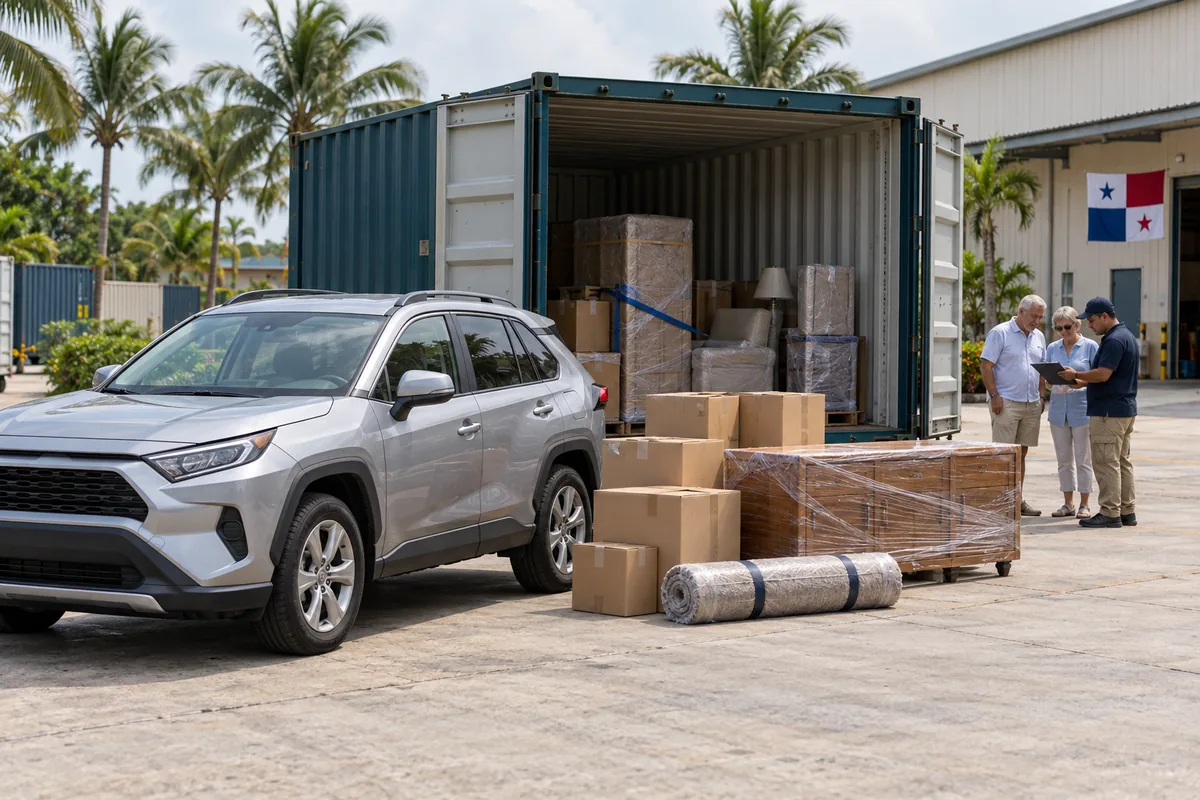
Pensionado Visa Holders: Import Benefits
Law 9 of June 24, 1987 establishes the following tariff benefits for qualifying beneficiaries:
- Household and personal articles: A one-time customs duty exemption up to $10,000.
- Vehicle: A customs duty exemption for one motor vehicle every two years, for personal or family use.
These benefits should not be interpreted as automatic permission to import any item or as a waiver of every expense. Review the Panama Pensionado Visa requirements alongside your shipping plans.
Why Do Some Sources Mention $25,000 for Household Goods?
Panama also has a household-goods provision under Article 216 of Cabinet Decree 41 of 2002. It describes qualifying used household furnishings and objects up to $25,000 in customs value for foreigners establishing domicile and eligible returning Panamanians.
This provision has different conditions from the Pensionado benefit in Law 9. Ask your customs broker which legal basis applies to your shipment before relying on a particular exemption amount.
Documents for Importing Household Goods
Your customs broker and shipping company should provide a coordinated checklist. Prepare the following information and records for their review:
- Passport: Identification pages and any certified copies required.
- Pensionado documentation: Your residence card and evidence supporting the requested exemption.
- Transport document: The bill of lading or air waybill, with the correct consignee information.
- Detailed inventory: A clear description of the goods and their values.
- Invoices or equivalent records: Where required for the goods and customs procedure.
- Customs documentation: The declaration and supporting exemption authorization applicable to the shipment.
Confirm the required language, originals, copies, and authentication before sending documents. Do not assume that an emailed inventory replaces every formal customs requirement.
Is a Panama Bank Reference Required?
Banking documentation should be matched to the applicant’s actual category. The published customs checklist includes bank-interest certification for Rentista applicants; this should not be treated as an identical requirement for every Pensionado.
If you need assistance establishing local banking arrangements, review our information about a Panama bank account.
Vehicles Require Additional Documents
A vehicle import involves documentation beyond the household-goods inventory. The National Immigration Service’s published exemption checklist includes:
- A power of attorney and exemption application.
- The customs declaration.
- Shipping documents, commercial invoice, and customs-facility documentation.
- Evidence of pension income in the required authenticated format.
- The original vehicle title.
- A copy of the definitive Pensionado card.
- A notarized copy of the relevant passport page.
- A national tax clearance certificate, or Paz y Salvo Nacional.
Your broker should also confirm vehicle identification, registration records, and any applicable technical or environmental requirements. Ensure the title, invoice, and shipping documents consistently identify the vehicle and owner.
For transport methods and broader shipping considerations, see our guide to shipping a car to Panama.
Can You Claim the Vehicle Exemption While Residency Is Pending?
Do not assume that a pending Pensionado application is enough to obtain the vehicle exemption. The published Immigration checklist specifies a definitive Pensionado card and states that a card still in process does not satisfy that requirement.
Before shipping while your application is pending, obtain advice about the available customs procedure, approval requirements, and possible storage costs. A letter from your attorney should not be presented as an automatic substitute for the required card.
Customs Duty, ITBMS, and Other Charges
A customs duty exemption and the treatment of other taxes are separate questions. Ask for a written assessment showing which charges are exempt and which remain payable for your goods and vehicle.
Public administrative guidance is not fully consistent on the treatment of the Selective Consumption Tax (ISC) and ITBMS for Pensionado vehicle imports. Confirm the applicable legal basis and official assessment with your customs broker and the authorities before budgeting.
Avoid calculating your total simply as 7% of the vehicle’s purchase price. Customs valuation, the approved exemption, and the applicable tax treatment require their own review.
Expenses to Include in Your Budget
- International freight and shipping insurance.
- Port, terminal, and handling charges.
- Customs broker and document-preparation fees.
- Storage or container-related charges if clearance is delayed.
- Any taxes, guarantees, or other charges applicable to the selected procedure.
- Delivery and subsequent vehicle registration expenses.
Request an itemized estimate that separates government charges from commercial service fees.
Once the Goods Arrive in Panama
The customs process involves declaration, verification of supporting documents, and authorization for release. An exemption does not remove those controls.
Depending on the customs risk assessment, a shipment may undergo documentary review, physical inspection, or release without those additional examinations. Therefore, not every shipment should be described as requiring an identical personal inspection.
Confirm who will represent you during clearance, whether your attendance is necessary, and where any inspection will occur. Keep the transport documents, inventory, and exemption paperwork readily available.
Additional Requirements for Pensionado Visa Holders
Coordinate the shipment with both your immigration status and the exemption procedure. Before departure, confirm:
- Whether your residence documentation is sufficient.
- Which exemption authorization must accompany the declaration.
- Any shipment or arrival deadlines applicable to your case.
- Whether a customs deposit, guarantee, or bonded-storage arrangement is necessary.
- What happens if approval takes longer than expected.
Do not rely on a universal six-month arrival rule or an old description of temporary circulation permits without checking the current procedure. Likewise, a vehicle’s release date cannot be guaranteed solely from the date its exemption application is filed.
Additional Requirements for Imported Cars
Customs clearance is only one part of preparing a vehicle for use in Panama. Confirm the subsequent identification checks, registration, inspection, license-plate, and insurance requirements before driving it.
Keep all customs-release and ownership documents. Review our guides to Panama vehicle license plates and Panama car insurance for related planning.
When Selling the Vehicle
Law 9 places restrictions on selling, leasing, pledging, or otherwise disposing of goods and vehicles imported under its tariff benefit without paying the applicable taxes, duties, and charges.
Before transferring an exempted vehicle, ask Customs to confirm the authorization and any tax payment required. Do not assume that selling to another Pensionado automatically removes those obligations.
The law’s specific three-year provision for selling household or personal articles should not be treated as an identical rule for vehicles.
Planning Your Pensionado Importation
- Confirm eligibility. Review your immigration documents and the proposed exemption.
- Choose the customs procedure. Ask your broker to identify the legal basis for household goods and the vehicle separately.
- Prepare consistent records. Check names, vehicle details, inventories, and shipping documents.
- Obtain a written cost estimate. Include taxes, freight, handling, and possible delays.
- Coordinate shipment and approvals. Avoid committing to arrival dates before understanding the required authorization.
- Complete clearance and follow-up. Retain release documents and arrange vehicle registration where applicable.
Frequently Asked Questions
Does duty free mean importing my belongings costs nothing?
No. Tariff relief does not eliminate freight, handling, broker fees, storage, or every other applicable charge.
Can I import a vehicle every two years as a Pensionado?
Law 9 provides the tariff benefit at that interval for qualifying personal or family use. Each import still requires the applicable approval and documentation.
Should I ship before receiving my Pensionado card?
Obtain advice first. The published vehicle-exemption checklist requires a definitive card, and early shipment may create clearance or storage difficulties.
Is the household-goods limit $10,000 or $25,000?
The amounts come from different legal provisions. Confirm which procedure applies rather than assuming they are interchangeable.
Can I sell my imported car later?
Confirm the applicable authorization and tax obligations before transferring a vehicle imported under an exemption.
Assistance With Your Move to Panama
International Relocation Firm can review the immigration aspects of your plans and help you understand the documentation needed for the relevant exemption procedure.
Contact Us for assistance with your Panama Relocation and Panama Immigration needs.
Official Import Resources
- National Immigration Service: vehicle-exemption documentation
- Customs: published exemption requirements for retirees and Pensionados
- National Customs Authority: customs-clearance procedures
Last updated October 2026.